in the hong kong server hosting market, 2u cabinets are widely used for their balance between height and density control. this article focuses on the practical guide for hong kong server hosting 2u cabinet configuration and heat dissipation management, aiming to provide executable suggestions for computer room deployment and operation and maintenance, taking into account reliability and energy efficiency.
the 2u cabinet is suitable for installing single or multiple 2u rack servers and network equipment. power consumption, heat generation, and front and rear space need to be evaluated. capacity planning should consider the utilization of the u-position of the cabinet, cable outlets, and reserved spaces for future expansion to avoid overloading that affects heat dissipation.
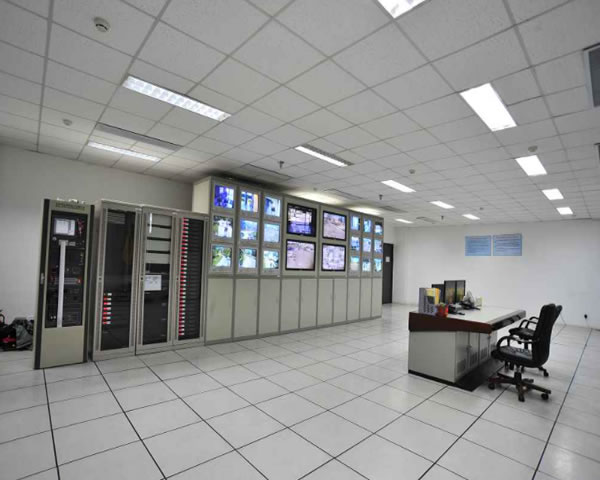
to ensure continuity, a dual power input and redundant power supply design should be adopted to coordinate with cabinet pdu distribution. power supply layout needs to consider circuit separation, current carrying capacity and convenient maintenance space to reduce the impact of single point failure on server availability.
good cabling can significantly improve cabinet airflow. network cables should be arranged along the side cable troughs to keep the front and rear airways clear. identification and routing specifications help to quickly troubleshoot and reduce interference to heat dissipation during manual maintenance.
computer room cooling focuses on controlling hot aisles and cold aisles. ensure that cold air enters from the front and hot air exits from the rear to avoid thermal backflow crossover. effective air flow management can reduce overall cooling load and increase equipment life.
sealing hot aisles and using front and rear door seals and u-shaped partitions can reduce the amount of cold air escaping. for 2u cabinets, partial enclosures and side air deflectors help guide airflow, improve air cooling efficiency and reduce the risk of hot spots.
air cooling is suitable for most 2u server hosting scenarios, with low cost and maintenance. liquid cooling is suitable for high-density or high-power consumption environments, but has higher requirements for cabinet modification and cooling circuits. the selection should be based on power density and long-term operating cost assessment.
real-time temperature and wind speed monitoring are critical to thermal management. it is recommended to deploy sensors at the front and rear of the cabinet and at key height points, connect the data to a centralized alarm platform, and combine threshold strategies to achieve proactive maintenance and rapid response.
during installation, weight distribution, ventilation clearances and grounding regulations should be followed. routine maintenance includes cleaning filters, checking fan operation and cable rectification. regular inspection records can identify hidden dangers and take corrective measures at an early stage to reduce the risk of failure.
in hong kong server hosting scenarios, you should pay attention to local computer room regulations, power and fire protection requirements. choosing a partner with a local operation and maintenance team and rapid response capabilities will help ensure the service level agreement (sla) and on-site emergency response efficiency.
in general, the implementation of hong kong server hosting 2u cabinet configuration and heat dissipation management requires collaborative optimization from multiple aspects such as capacity planning, power supply and cabling, air flow control, monitoring alarms and maintenance processes. it is recommended to conduct power consumption and heat assessment first, and then implement zoned air flow and monitoring solutions to balance reliability and energy efficiency.
- Latest articles
- Common Troubleshooting Steps And Rapid Recovery Solutions For Taiwan Telecom CN2 Broadband
- An Automated Operations And Maintenance Solution Covering Everything From Development To Monitoring How To Build A Site On Hong Kong Cloud Servers
- From A Business Perspective, Is Vietnam's VPS Reliable? Considerations Regarding Compliance And Data Security
- Free Server Korea Security Protection Policy And Backup Implementation Guide
- Cost And Operation Management Recommendations For Enterprises Deploying Korean CN2 Site Cluster Cloud Servers
- Basic Information On Taiwan Proxy Servers, Common Terminology Explanations, And Purchase Precautions
- How To Choose A Cloud Server In Thailand: From Network Latency To After-sales Service, Comprehensive Aspects
- Recommended Recommendations For Operators To Improve Thailand's High-Defense VPS Protection And Bandwidth Stability By Comparison
- Optimized Storage Costs For Hong Kong Hosted Servers, Hard Disk Servers, Layered Storage, And Cold Archiving Solutions
- Are Tencent Cloud Korean Servers Native? Recommendations For Local Service Provider Integration And Latency Optimization
- Popular tags
-
Five Reasons To Choose Hong Kong Cn2 Cloud Hosting
this article will introduce you to the five major reasons for choosing hong kong cn2 cloud hosting and help you make a wise choice of cloud hosting. -

Looking To Buy A Hong Kong Site Group And Understand The Advantages And Disadvantages Of The Server
this article takes an in-depth look at the advantages and disadvantages of hong kong server clusters to help you understand the factors you should consider when purchasing a server. -
Optimization Practice Hong Kong Site Group Vps Network And Storage Performance Improvement Guide
a practical guide for vps network and storage optimization for hong kong site groups, covering network topology, bandwidth and delay control, storage io optimization, cdn and monitoring, emphasizing feasible strategies in geo/seo scenarios.